# Fur Market Update — Buyers Seeing Improvement as Trapping Season Opens
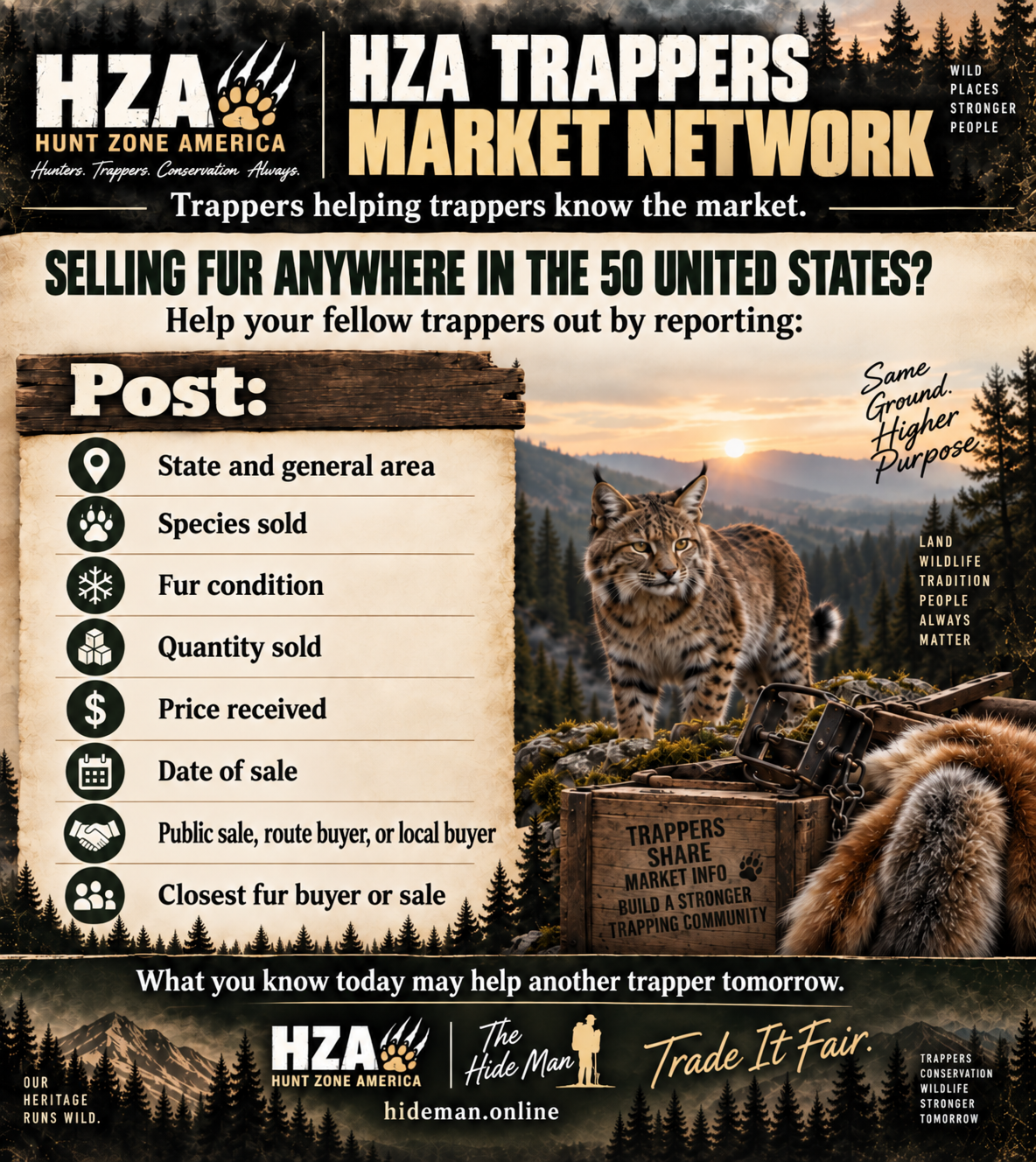
**HZA Trappers Market Network**
*Trappers helping trappers know the market.*
**October 11, 2026**
Are fur prices finally starting to improve?
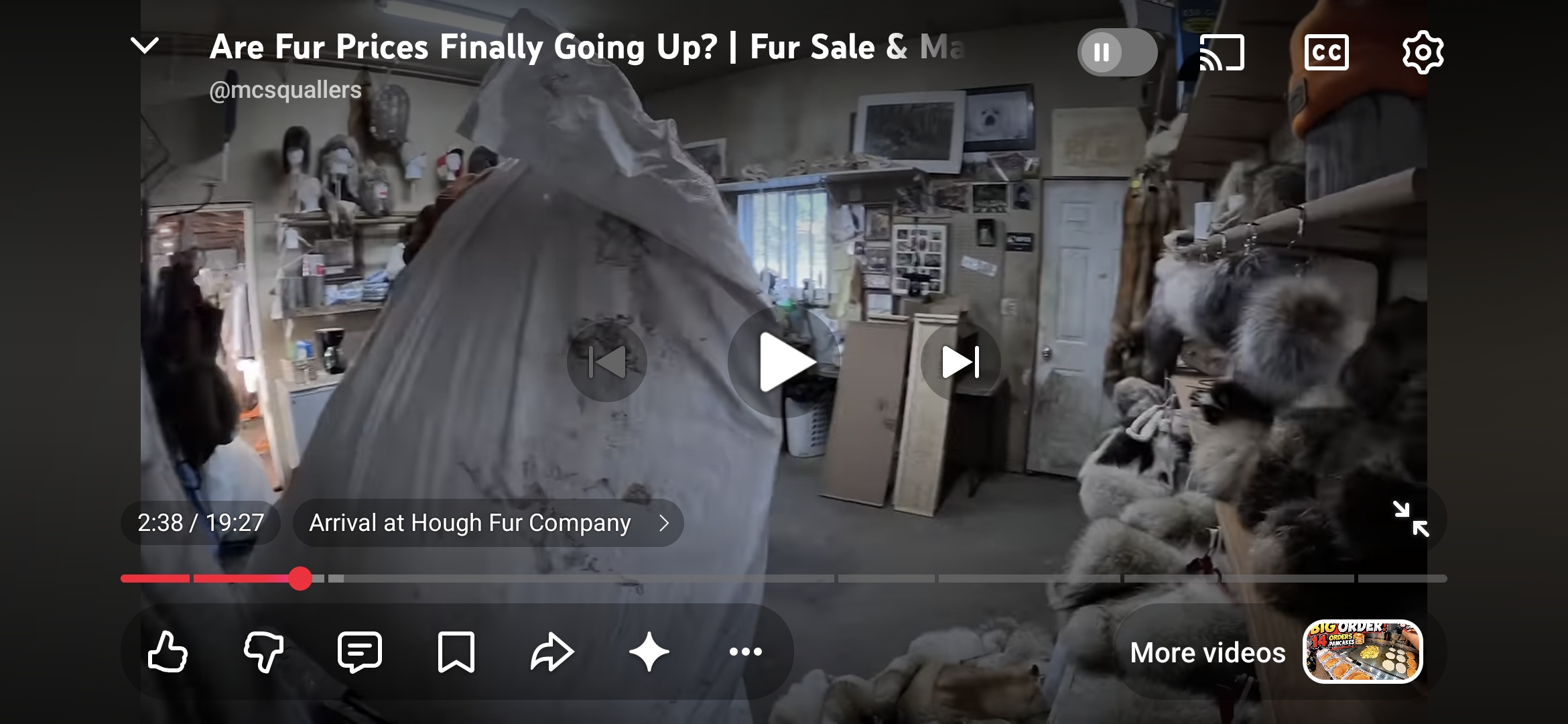
MC Squallers recently visited a northern Minnesota fur buyer to sell a collection of raccoons, beaver, mink, skunk, and muskrat. The resulting video provides some useful firsthand information about current buying activity and what trappers across the country might expect this season.
The encouraging news is that **buyers are finding markets for fur that was difficult to sell previously.** But the buyer was careful to explain that an improving market does not necessarily mean a booming market.
He expects overseas demand and the coming retail season to influence prices, with gradual improvement preferable to sudden price spikes.
## Raccoon — Heavy Fur Still Matters
The buyer examined approximately 50 raccoons and discussed how density, color, size, and condition influence their value.
Heavy northern raccoons continue to attract interest, particularly from European buyers. Medium-heavy and lighter skins have different uses and do not necessarily bring the same prices.
The collection being evaluated was discussed at approximately **$12–$14 average for prepared raccoons**.
The buyer emphasized that properly prepared skins and good fur quality make a difference. Cuts, damage, and other defects can reduce a pelt's grade and selling price.
The encouraging part is that raccoons that previously had very little market value are becoming saleable again.
## Skunk — Strong Prices, but Don't Expect $40 Everywhere
One particularly desirable skunk brought approximately **$40–$45**.
However, the buyer made it clear that this was not representative of what trappers should expect nationwide.
His broader expectations were:
* **$18–$23:** Approximate nationwide price range.
* **$25–$30:** Possible for particularly good collections.
* **$40–$45:** Exceptional individual skunks.
He also discussed whole-carcass skunks bringing approximately $20–$25 and the considerable value of skunk tails.
An interesting observation was that skunk buying activity had slowed compared with the previous year. With other fur species attracting better prices, trappers may be shifting their attention.
## Muskrat — Prices Showing Improvement
The buyer quoted the following muskrat prices:
| Size | Price |
| ------------------ | ----: |
| Large | $3 |
| Extra-large | $4 |
| Double-extra-large | $5 |
He indicated these prices were approximately $1 higher than previously.
For trappers working good muskrat habitat, that improvement is worth watching.
## Beaver — One of the Stronger Markets
Beaver received particularly favorable attention during the discussion.
The buyer described a market that had recovered after a period of weaker prices and excess supply.
He estimated that trappers around the country might see approximately **$15–$18 per pound for dried beaver pelts**, depending on quality.
One collection weighing 19 pounds was valued at approximately $17 per pound.
That works out to roughly $323 for the collection.
**Important:** These are prices for dried beaver pelts sold by weight, not whole beaver carcasses.
The buyer suggested that beaver demand has remained comparatively strong.
## Mink — Preparation and Timing
The discussion also covered mink, particularly the tradeoff between beginning trapping at season opening and waiting for heavier, more fully prime fur.
The buyer argued that catching more animals earlier can sometimes outweigh the additional value of waiting for perfect fur.
He also discussed the importance of clean preparation when selling wild mink into markets accustomed to ranch-raised pelts.
No dependable current mink price was established in the discussion.
## What About the Nationwide Fur Market?
The buyer expressed cautious optimism.
He believes overseas markets may become more active as Chinese holiday periods, international auctions, and retail buying cycles move forward.
But he repeatedly cautioned against expecting prices to explode.
His preference was for gradual, sustainable improvement rather than rapid price increases followed by sharp declines.
**The message was simple: the market is improving, but quality and demand still determine the price.**
## The Hide Man's Notebook — What We Take From This
There are several useful lessons in this discussion.
First, an exceptional individual sale is not the same thing as an average price. A $45 skunk does not mean every skunk in the country is worth $45.
Second, where fur originates matters. Heavy northern raccoons and lighter southern raccoons do not necessarily compete in the same market grades.
Third, preparation matters. A clean, properly handled pelt is easier to market and evaluate.
Finally, what a buyer is willing to pay today is more useful than speculation about what prices might become later.
For Kansas trappers, these figures provide useful market intelligence, but they should not be mistaken for confirmed Kansas buying prices.
**Watch the original video:**
[Are Fur Prices Finally Going Up? | Fur Sale & Market Update — MC Squallers](
https://youtu.be/Lx_DgbSDXHo)
*Prices and market expectations reported from the video discussion. They are not guaranteed offers or independently verified nationwide averages.*
---
**HZA Trappers Market Network**
*Trappers helping trappers know the market.*
**Have you sold fur recently?** Post the species, grade or condition, location, and actual price received. Firsthand sales information helps other trappers understand what the market is doing.
**Carry It On.**
**Trade It Fair.**
**The Hide Man — Hunt Zone America**
 Tell HZA what fur is actually bringing in your area and where the nearest usable fur market or buyer is.
We want firsthand posts from trappers on:
State and general area
Species sold
Green, carcass, skinned, stretched/put-up, or other condition
Number of pelts sold
Price received or average price
Date of sale
Public fur auction, route buyer, or local fur buyer
Closest fur buyer or sale you know of
Why post it?
Because the trapper three counties over—or three states over—may be sitting there wondering:
Is it worth putting this fur up? Where can I sell it? What is somebody actually paying right now?
Your post could help that trapper make the decision.
HZA would identify information for what it is: verified public sale data, documented trapper-reported sales, or unverified firsthand posts
And we don't need a trapper's name published. The useful information is where, what, when, how it was handled, and what it brought.
HZA Trappers Market Network
Trappers helping trappers know the market.
If you're selling fur in the United States, post what you're seeing in your area.
What you know today may help another trapper tomorrow.
BOBCATS
Iowa — $34.25, 2025, finished/put-up, 2 bobcats. The Iowa Trappers Association itself says “F” means finished and reports 2 finished bobcats averaging $34.25. Iowa Trappers Association — 2025 Fur Auction Results
Missouri — $80.35, Feb. 24, 2024, 92 bobcats. This one is important: the Missouri Department of Conservation's actual table is explicitly titled “Furbearer pelt prices in Missouri from the annual Missouri Trappers Association Fur Auction, February 24, 2024, Montgomery City, Missouri.” It lists 92 bobcats at a $80.35 average and explains the auction averages include green, finished and damaged fur. So this is an auction-sale number, not a fur-buyer survey. Missouri MDC — 2024 Furbearer Program Annual Report
Michigan — $252.78, April 2026, 9 bobcats. The Michigan Trappers & Predator Callers April 2026 Fur Sale table published in Fur Taker Magazine lists 9 bobcats, $435 high, $125 low and $252.78 weighted average. Michigan Trappers & Predator Callers — April 2026 Fur Sale table
Ohio — $93.08, March 1, 2026, 12 bobcats. The Ohio State Trappers Association's own Kidron 2026 results show 12 bobcats totaling $1,117 and an overall $93.08 average. Ohio State Trappers Association — Kidron 2026 Auction Results
Trade It Fair.
The Hide Man
Tell HZA what fur is actually bringing in your area and where the nearest usable fur market or buyer is.
We want firsthand posts from trappers on:
State and general area
Species sold
Green, carcass, skinned, stretched/put-up, or other condition
Number of pelts sold
Price received or average price
Date of sale
Public fur auction, route buyer, or local fur buyer
Closest fur buyer or sale you know of
Why post it?
Because the trapper three counties over—or three states over—may be sitting there wondering:
Is it worth putting this fur up? Where can I sell it? What is somebody actually paying right now?
Your post could help that trapper make the decision.
HZA would identify information for what it is: verified public sale data, documented trapper-reported sales, or unverified firsthand posts
And we don't need a trapper's name published. The useful information is where, what, when, how it was handled, and what it brought.
HZA Trappers Market Network
Trappers helping trappers know the market.
If you're selling fur in the United States, post what you're seeing in your area.
What you know today may help another trapper tomorrow.
BOBCATS
Iowa — $34.25, 2025, finished/put-up, 2 bobcats. The Iowa Trappers Association itself says “F” means finished and reports 2 finished bobcats averaging $34.25. Iowa Trappers Association — 2025 Fur Auction Results
Missouri — $80.35, Feb. 24, 2024, 92 bobcats. This one is important: the Missouri Department of Conservation's actual table is explicitly titled “Furbearer pelt prices in Missouri from the annual Missouri Trappers Association Fur Auction, February 24, 2024, Montgomery City, Missouri.” It lists 92 bobcats at a $80.35 average and explains the auction averages include green, finished and damaged fur. So this is an auction-sale number, not a fur-buyer survey. Missouri MDC — 2024 Furbearer Program Annual Report
Michigan — $252.78, April 2026, 9 bobcats. The Michigan Trappers & Predator Callers April 2026 Fur Sale table published in Fur Taker Magazine lists 9 bobcats, $435 high, $125 low and $252.78 weighted average. Michigan Trappers & Predator Callers — April 2026 Fur Sale table
Ohio — $93.08, March 1, 2026, 12 bobcats. The Ohio State Trappers Association's own Kidron 2026 results show 12 bobcats totaling $1,117 and an overall $93.08 average. Ohio State Trappers Association — Kidron 2026 Auction Results
Trade It Fair.
The Hide Man